

Thermodynamic (Catania)


The Thermodynamics laboratory is equipped with the following instruments:
- TA Instruments Differential Scanning NanoCalorimeter;
- TA Instruments Isothermal Titration NanoCalorimeter;
- Metrohm Autolab 86465 Potentiostat;
- Metrohm Titrando 905 Titrator.
- Biolayer Interferometry, BLITZ Octet
TA Instruments Differential Scanning NanoCalorimeter
Differential scanning calorimetry (DSC) is an analytical technique used to study the structural stability profiles of biological macromolecules diluted in solution and artificial membranes, revealing their structural strengths and weaknesses. These structural rearrangements result in heat absorption caused by the redistribution of non-covalent bonds. DSC measures this heat absorption, the enthalpy (∆H) associated with the heat-induced transition, and the thermal transition temperature (Tm). The TA Instruments NanoDSC differential scanning calorimeter is designed to characterize the thermodynamic stability of biomolecules diluted in solution. The instrument’s technical characteristics are: Temperature range -10°C to 130°C, scan rate 0.001°C to 2°C/min, capillary calorimeter cell, cell volume 300 µL.
The Metrohm Autolab 86465 potentiostat, combined with the use of three electrodes, is generally used for acquiring voltammograms. Voltammetry is an electrochemical technique in which the current is measured as the potential applied to the working electrode in a system varies. Cyclic and square-wave voltammetry provide information on the formal redox potential and the degree of reversibility of the electrochemical process. The redox potential of a metal complex (e.g., Cu) is strongly influenced by the type, strength, and geometric arrangement of the donor atoms, so different coordination neighborhoods will have different redox potentials and different degrees of reversibility (also as a function of pH). These techniques allow the characterization of different metals at different metal centers coordinated by peptides or proteins.
Nano Differential Scanning Calorimeter nanoDSC TA InstrumentsDifferential Scanning Calorimetry (DSC) is an analysis technique used to study the structural stability profiles of biological macromolecules diluted in solution, artificial membranes, revealing their strengths and weaknesses in the structure. The heat exchange associated with the thermal transition of the molecule is measured if subjected to controlled heating. These structural rearrangements result in the absorption of heat caused by the redistribution of non-covalent bonds. NanoDSC TA Instruments measure the heat absorption, the enthalpy (∆H) associated with the heat-induced transition and the thermal transition temperature (Tm). The technical characteristics of the instrument are: Temperature range -10 °C 130 °C, scanning speed 0.001 ° C to 2 ° C / min, capillary calorimetric cell, cell volume 300 µL. |
Isothermal calorimeter ITC TA InstrumentsThe isothermal titration calorimeter (ITC) allows the measurement of the thermodynamic quantities associated with the binding of two or more biomolecules such as: Binding constant (Ka), Enthalpy (ΔH), Entropy (ΔS), Stoichiometry (n). The NanoITC TA Instruments permits a label-free direct measurement of the heat evolved or absorbed during a binding reaction. Binding models are used to directly determine the thermodynamic parameters. Moreover, il allows the automated control of the various phases of the analysis with a single calorimeter management and data analysis program responding to high sensitivity characteristics to perform the analysis of very diluted samples. Technical characteristics: Sensitivity: 0.1 μJ; Cell loading volume: 1ml; Operating temperature: 0 to 60 ° C |
Potentiostat Metrohm Autolab 86465The potentiostat Metrohm Autolab 86465, with a classic three electrodes assembly, is generally used for recording voltammograms. Voltammetry is an electrochemical technique in which a varying potential is applied to a working electrode in an electrochemical system, and the corresponding current is measured. Cyclic and square wave voltammetry provide information about formal redox potential and reversibility degree of the electrochemical process. Redox potential of metal (e.g. Cu) complexes is strongly affected by the nature, the strength and geometrical disposition of the donor atoms, so as diverse coordination environments show different redox potentials and reversibility (also as function of the pH value). These techniques allow also to characterize different metal and/or different coordinated metal centres embedded in peptide/protein. |
Titrator Metrohm Titrando 905Data coming from titrations allow the determination of the (de)protonable atoms of a molecule. This knowledge is important to understand which state the ligand assume at certain pH value. More important is the determination of the species distribution of one or more ligands in the presence of a metal ion. In fact, the state of complexation depend upon the protonable sites, the coordination demand of the specific metal ion and on the pH value. These data let to determine which donor atoms are involved in the metal coordination as the pH is varied. All these information allow to understand how a specific substance change its chemical state upon dissolution at a certain pH value or meet another competing ligand. |
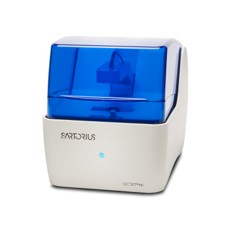
Biolayer Interferometry, BLITZ OctetThe Sartorius Octet® system is based on Bio-Layer Interferometry (BLI) technology and is used for real-time, label-free analysis of biomolecular interactions. Main applications include the determination of binding constants between proteins or between a protein and a biomolecule, protein quantification and antibody. |
RESEARCH AREA
KEYWORDS
| Contacts |
|---|
| +39 095 7338 438 |
| danilo.milardi@cnr.it |