Institute of Crystallography
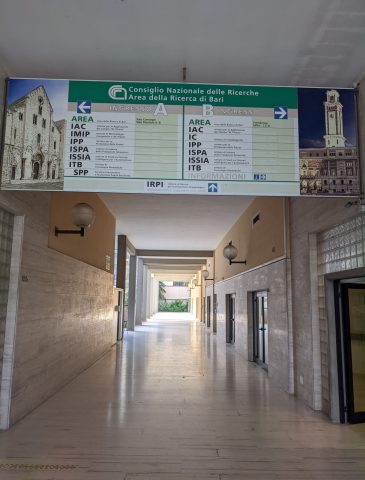
Bari
The Bari branch of the Institute of Crystallography (IC) conducts basic and applied research across various scientific fields. These range from the development of crystallographic methodologies and automated computing for single-crystal and powder X-ray diffractometry—areas where the Institute is internationally recognized as a key developer of algorithms and software—to structural chemistry and biology. Furthermore, the Institute focuses on diffraction physics and addresses interdisciplinary issues in structural chemistry, such as molecular modeling for biopharmaceuticals.
The Institute also carries out research into the development of biological and pharmacological compounds (e.g., antimicrobials, anti-cancer agents), studies materials of technological interest such as structural nanomaterials and innovative biomaterials, and develops instrumental research. The latter includes the creation of biosensors based on photosynthetic protein analysis techniques, suitable for a wide range of environmental, food, and medical applications.
Due to its unique characteristics, the IC brings together diverse types of know-how and multidisciplinary expertise across several areas, including Nanomedicine, Biosciences, Structural Chemistry and Biology, Applied Chemistry and Physics, and Materials Science. This provides significant potential for both fundamental and applied research.
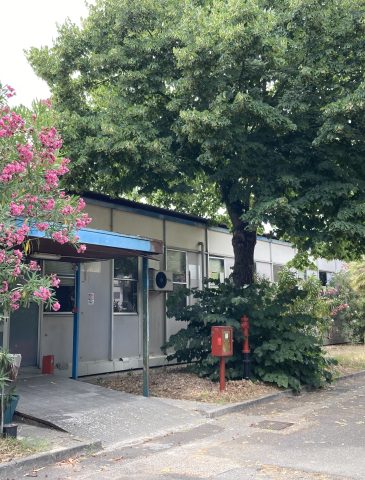
Roma
The Montelibretti branch of the Institute of Crystallography is located within the Roma1 Research Area and comprises 23 staff members, including researchers, technologists, technicians, and administrative personnel.
Research activities at the Montelibretti branch are focused on improving environmental and human health through the development of green, low-impact technologies applicable across various production sectors, as well as the advancement of knowledge in the nutraceutical, pharmaceutical, biomedical, and energy fields.
Fundamental and translational research objectives are achieved by integrating multidisciplinary expertise in chemistry, biochemistry, molecular biology, biophysics, bioinformatics, and bioengineering. Within this framework, researchers have identified products and processes with significant biotechnological potential through the study of plant systems. Examples include:
The development of green extraction technologies for the recovery and valorization of bioactive molecules from agri-food waste;
The cultivation of algal biomass for the production of biomaterials used in the restoration of stone and paper artifacts, as well as CO2 biofixation;
The extraction of phytometabolites with beneficial effects on human health for the development of nutraceuticals;
The expression and crystallization of engineered enzymes for biomimetic CO2 capture;
The development and characterization of nano/bio-materials for drug delivery;
The development of biosensing systems for detecting analytes of environmental, agro-environmental, and biomedical interest, including their validation in the field and on real samples;
The development of remote monitoring systems for biomedical and environmental applications.
Furthermore, the branch conducts studies aimed at developing new pharmacologically active molecules—both plant-derived and biomimetic—for treating human diseases and plant pathologies. These include structural binding characterization to understand the molecular mechanisms triggered by the interaction of natural or synthetic molecules with their biological targets, and research into the molecular role of proteins involved in rare multisystem hereditary diseases, mitochondrial alterations, and the autophagic process.
Finally, the Institute performs structure and dynamics studies on complex materials with applications in superconductivity, biomedicine, and the development of technologies for the energy transition.
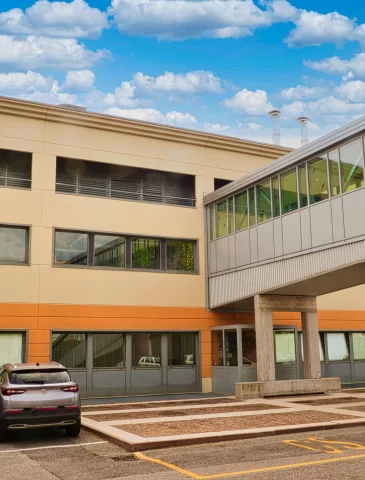
Trieste
The Trieste branch of the Institute of Crystallography (IC-TS) was originally established in 1992 as a detached section of the ‘G. Giacomello’ Institute of Chemical Structuristics of Montelibretti (Rome). Since its inception, IC-TS has been hosted within the Area Science Park, and in 2014 it moved to the Basovizza (TS) facilities, which house its offices and laboratories.
IC-TS maintains a permanent staff of five researchers and two administrative/technical units, in addition to post-docs, PhD students, and Master’s students involved in research activities.
Although IC-TS was founded primarily to support synchrotron light activities, its disciplinary scope has evolved over time, while maintaining a core focus on the study of structure-activity-function relationships in biological and inorganic systems. Currently, the main research lines include:
Structure-activity relationship studies of organic and inorganic materials at varying levels of complexity, utilizing synchrotron X-ray diffraction.
Structural Biology for fundamental research and drug discovery. This specifically involves studying the structure-function relationship of biological macromolecules through both structural (X-ray crystallography, SAXS) and biophysical approaches (Grating Coupled Interferometry, ITC, DSF, DLS, Fluorescence). Furthermore, advanced molecular biology and biochemistry techniques are employed for the expression and purification of the macromolecules under study.
Design, modification, and synthesis of functionalized peptides to support structure-activity relationship studies. Specifically, part of the research and synthesis activity focuses on novel antimicrobial peptides, both proline-rich and otherwise.
IC-TS houses laboratories dedicated to protein expression and purification, as well as biophysical measurements of intermolecular interactions, kinetics, and ligand-receptor affinity. There is also a dedicated area for the crystallization of biological macromolecules for crystallographic studies.
IC-TS co-manages (at 50%) the scientific activities of the XRD1 beamline at the Elettra Synchrotron in Basovizza and actively collaborates with many prominent scientific institutions in Trieste: Elettra Sincrotrone Trieste, Area Science Park, CNR-IOM, the University of Trieste (Departments of Life Sciences and of Chemical and Pharmaceutical Sciences), and the International Centre for Genetic Engineering and Biotechnology (ICGEB).
Catania
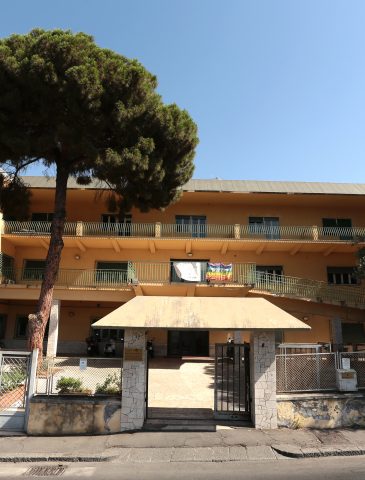
The Catania site of the CNR Institute of Crystallography combines advanced skills in chemistry and biology to understand the molecular mechanisms underlying socially impactful diseases such as Alzheimer’s disease, Parkinson’s disease, and type 2 diabetes, and to develop new tools for their prevention, diagnosis, and therapy. The unit integrates expertise in peptide synthesis, calorimetry, potentiometry, cyclic voltammetry, electron spin resonance, mass spectrometry, spectroscopy, thermodynamics, biochemistry, and cellular biology, complemented by advanced imaging techniques, proteomics analyses, and gene expression modulation.
Research activities range from the design and synthesis of model peptides to study protein misfolding and interaction with transition metals, to the thermodynamic characterization of fibrillogenic systems and artificial lipid membranes. The group develops new bioconjugates and multifunctional anti-fibrillogenic molecules capable of counteracting protein aggregation and oxidative stress, with potential applications in protein conformational disorder diseases related to aging.
A key research area focuses on studying the biological properties of non-natural regulatory peptides. The effects of cross-talk between the proteome and metallome are analyzed, with attention to metals such as copper and zinc and the role of ionophoric peptides in modulating cellular signals and trophic factors.
The group also develops new molecular and nanotechnological systems for diagnostics, targeted drug delivery, and theragnostic applications oriented towards personalized medicine. Among the most advanced lines of research is the study of proteostasis and the Ubiquitin-Proteasome System (UPS) as a therapeutic target in oncological and neurodegenerative diseases, with particular attention to the impact of metal dyshomeostasis and the potential modulators of specific molecules that can enhance proteasome activity.
Finally, another line of research focuses on the beta-amyloid (Aβ) peptide, investigating both its pathological effects and its still poorly understood physiological role, using in vitro neuronal models to identify new therapeutic targets for Alzheimer’s disease.
Caserta
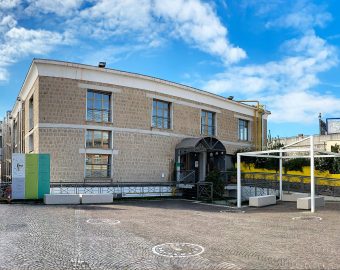
The URT is located within the Department of Environmental, Biological, and Pharmaceutical Sciences and Technologies at the University of Campania ‘Luigi Vanvitelli’. Active since February 2022, its research activities—conducted in collaboration with companies, universities, and other research centers—focus on the development of new biologically active molecules of varying complexity. This is achieved through Chemical and Molecular Biology techniques, with applications in both therapeutic and diagnostic fields.
In particular, the objective is to identify and characterize novel molecular mechanisms that regulate molecular targeting in systems of different complexity, in order to modulate their biological and genic functions. The unit also studies specific delivery processes for the formulation of new pharmacologically active substances. Research themes revolve around the study of molecular recognition phenomena in complex systems, aiming to develop molecular-based systems capable of modulating biological functions with specific delivery properties. Specifically, research topics include the structural study of protein/protein and protein/oligonucleotide complexes, as well as the design, synthesis, and characterization of peptide systems, peptidomimetics, and modified oligonucleotides for diagnostic and therapeutic applications.
In collaboration with the University, the facility provides access to:
A peptide and PNA synthesis laboratory, equipped with HPLC purification systems;
A spectroscopic characterization laboratory, equipped with Circular Dichroism (CD) and UV/VIS spectrometers;
A Nuclear Magnetic Resonance (NMR) laboratory, featuring 600 MHz and 500 MHz NMR spectrometers equipped with cryoprobes.
Como