
Institute of Crystallography - CNR

Roma

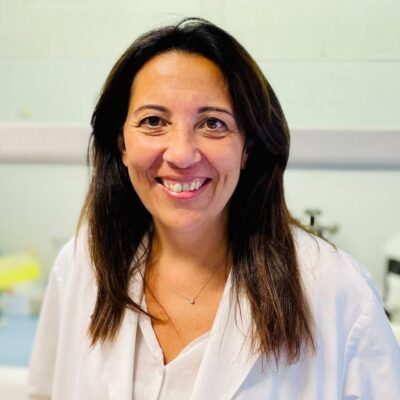
Responsabile di Sede: Roberta Montanari

Contacts
segreteria.mlib@ic.cnr.it
Tel: +39 06 90672627 – Fax: +39 06 90672630
Address
Roma
Strada Provinciale 35d, 9 – 00010, Montelibretti (RM)

The Montelibretti branch of the Institute of Crystallography is located within the Roma1 Research Area and comprises 23 staff members, including researchers, technologists, technicians, and administrative personnel.

Research activities at the Montelibretti branch are focused on improving environmental and human health through the development of green, low-impact technologies applicable across various production sectors, as well as the advancement of knowledge in the nutraceutical, pharmaceutical, biomedical, and energy fields.

Fundamental and translational research objectives are achieved by integrating multidisciplinary expertise in chemistry, biochemistry, molecular biology, biophysics, bioinformatics, and bioengineering. Within this framework, researchers have identified products and processes with significant biotechnological potential through the study of plant systems. Examples include:

The development of green extraction technologies for the recovery and valorization of bioactive molecules from agri-food waste;

The cultivation of algal biomass for the production of biomaterials used in the restoration of stone and paper artifacts, as well as CO2​ biofixation;

The extraction of phytometabolites with beneficial effects on human health for the development of nutraceuticals;

The expression and crystallization of engineered enzymes for biomimetic CO2​ capture;

The development and characterization of nano/bio-materials for drug delivery;

The development of biosensing systems for detecting analytes of environmental, agro-environmental, and biomedical interest, including their validation in the field and on real samples;

The development of remote monitoring systems for biomedical and environmental applications.

Furthermore, the branch conducts studies aimed at developing new pharmacologically active molecules—both plant-derived and biomimetic—for treating human diseases and plant pathologies. These include structural binding characterization to understand the molecular mechanisms triggered by the interaction of natural or synthetic molecules with their biological targets, and research into the molecular role of proteins involved in rare multisystem hereditary diseases, mitochondrial alterations, and the autophagic process.

Finally, the Institute performs structure and dynamics studies on complex materials with applications in superconductivity, biomedicine, and the development of technologies for the energy transition.

STAFF

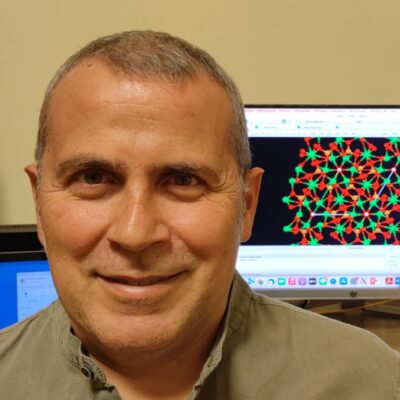
Agostini Giovanni

Technical operator

Antonacci Amina

Researcher
0690675597

Bartolucci Cecilia

Researcher

Campi Gaetano

Researcher
06 90672624

Capelli Davide

Researcher
0690672922

Capitelli Francesco

Researcher
+390690672616

Catricala’ Massimiliano

Technical Collaborator E.R.

D’Aprile Cristiano

Technologist

De Cristofaro Barbara

Technical Collaborator E.R.
+39 06 90672644

Gramanzini Matteo


Masi Annalisa

Researcher
06. 90672617

Moccia Maria

Researcher
06 90672 676

Montanari Roberta

Researcher
0690672618

Pascucci Barbara

Researcher
+39 0690672917

Petronella Francesca

Researcher

Petrucci Mariano


Pilloton Roberto

Senior Researcher

Ranieri Antonello

Technical Collaborator E.R.

Rea Giuseppina

I Ricercatore

Scognamiglio Viviana

Researcher
0039 06 90672479

Tarquini Ombretta

Technologist

Vergari Francesca

Technologist
06 90672632

Vitali Alberto


Laboratories
Cultural Heritage

The Cultural Heritage Laboratory is devoted to study and characterize inorganic materials in cultural heritage through chemical-physical analyses, non-invasive (X diffraction from powders: XRPD, X-ray fluorescence: XRF) and imaging (X-ray, IR reflectography, UV imaging and induced fluorescence imaging (i.e., VIL imaging) and optical microscopy with focus stacking. Analyses are performed both in laboratory and in…

Advanced X-ray Innovative Applications Laboratory (Axial)

Advanced X-ray Innovative Applications Laboratory (Axial). Lo strumento è composto da un generatore Spellman DF3, con una potenza massima di 3 Kw erogata attraverso un tubo rX di pari capacità con target al rame. La geometria dual focus è in grado di lavorare su due differenti esperimenti: 1) diffrazione da polveri microcristalline per determinazioni qualitative…

Spectroscopy and microalgae-based biosensors

The laboratory is dedicated to the selection and characterization of new biological recognition elements (e.g. microorganisms, proteins and synthetic macromolecules) for biosensoristic purposes by spectroscopic techniques (fluorescence, absorbance and circular dichroism). For these reasons, the laboratory provide portable equipment (potentiometers and fluorimeters) for the development of optical and electrochemical biosensors for agrifood, environmental, biomedical and…

Algal growth

The laboratory allows for the growth of different algal strains of fresh and marine water sources, as well as their physiological characterization by absorption and fluorescence spectroscopy through main parameters as growth rate, cell count, microscopical observation, analysis of the main photosynthetic pigment content, photosynthetic activity. This activity enables the selection of novel biological recognition…

Photosynthesis

Research is mainly focused on: i) studies of adaptation and acclimation of photochemical reactions toward biotic and abiotic stress factors; ii) unraveling the correlation between structure and functionality of pigment-protein complexes; iii) development of biological assays based on photosynthetic activity (whole cells, extracts and macromolecular assemblies) for the detection of environmental pollutants; studies on the…

Surface Plasmon Resonance

SensiQ Pioneer AE equipment is a fully-automated, high sensitivity, three-channel Surface Plasmon Resonance (SPR) System ideal for small molecule-protein interaction studies, antibody characterization and selection, and the study of protein-protein interaction kinetics.

Biology

The Laboratory of Biology 1 is a multipurpose space fully equipped for: extraction and manipulation of nucleic acids from a wide range of plant, animal, and microbial samples; expression, extraction, purification, and characterization of recombinant proteins; extraction of photosynthetic active macromolecular assemblies; extraction of secondary metabolites with nutraceutical properties; determination of antioxidant capacity in plant…

Molecular analysis and biosensoristic

The laboratory is dedicated to the quantitative analysis of molecular recognition events carried out through the application of PCR and Real-Time PCR techniques for the determination of differential gene expression from different types of samples, and electrochemical techniques for the development of sensors / biosensors. for use in the agro-environmental and medical sectors. Main equipments:…

Biochemistry

BioLogic DuoFlow Systems. These are medium pressure laboratory scale chromatography systems for protein purification. These systems are modular, capable of running at high flow rates (0.05–80 ml/min) with back pressures up to 3,500 psi, with pH monitoring, buffer blending, and column scouting capabilities. It can be used in conjunction with a fraction collector for unattended…

Automatic Synthesis of Oligonucleotides

Expedite Nucleic Acid Synthesis System. Oligonucleotides are synthesized using phosphoramidite chemistry by Expedite 8900 automatic DNA / RNA synthesizer. This synthesizer allows simultaneous synthesis of two different sequences using two columns. The synthesis can be programmed on a scale of 0.05 µmole, 0.2 µmole, 1 µmole and 15 µmole.

Automatic Synthesis of Peptides/PNA and Mass Spectrometry