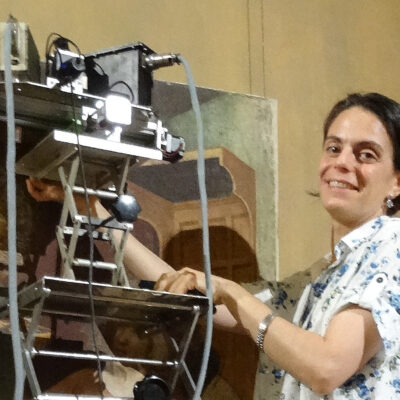

The Montelibretti branch of the Institute of Crystallography is located within the Roma1 Research Area and comprises 23 staff members, including researchers, technologists, technicians, and administrative personnel.
Research activities at the Montelibretti branch are focused on improving environmental and human health through the development of green, low-impact technologies applicable across various production sectors, as well as the advancement of knowledge in the nutraceutical, pharmaceutical, biomedical, and energy fields.
Fundamental and translational research objectives are achieved by integrating multidisciplinary expertise in chemistry, biochemistry, molecular biology, biophysics, bioinformatics, and bioengineering. Within this framework, researchers have identified products and processes with significant biotechnological potential through the study of plant systems. Examples include:
The development of green extraction technologies for the recovery and valorization of bioactive molecules from agri-food waste;
The cultivation of algal biomass for the production of biomaterials used in the restoration of stone and paper artifacts, as well as CO2 biofixation;
The extraction of phytometabolites with beneficial effects on human health for the development of nutraceuticals;
The expression and crystallization of engineered enzymes for biomimetic CO2 capture;
The development and characterization of nano/bio-materials for drug delivery;
The development of biosensing systems for detecting analytes of environmental, agro-environmental, and biomedical interest, including their validation in the field and on real samples;
The development of remote monitoring systems for biomedical and environmental applications.
Furthermore, the branch conducts studies aimed at developing new pharmacologically active molecules—both plant-derived and biomimetic—for treating human diseases and plant pathologies. These include structural binding characterization to understand the molecular mechanisms triggered by the interaction of natural or synthetic molecules with their biological targets, and research into the molecular role of proteins involved in rare multisystem hereditary diseases, mitochondrial alterations, and the autophagic process.
Finally, the Institute performs structure and dynamics studies on complex materials with applications in superconductivity, biomedicine, and the development of technologies for the energy transition.